Showing posts with label movies. Show all posts

Friday, May 31, 2019

Why HTTYD is the Greatest of All Time

(Or The Chapter in Which I Gush About My Favorite Animated Films)

I realize the hype for Hidden World is dying down since it's been out for quite a few months now; however, since I just saw it this week, my hype is activated fiercely all over again. Thus, this post.


The HTTYD films have held a special spot in my life since their beginning. I remember watching the first one with my sisters and feeling incredibly impressed as a writer by the storyline and characters. When we were dating, everyone joked about how Jed and I are just like Hiccup and Astrid, and so my husband sang Valka and Stoick's song (For the Dancing and the Dreaming) to me in his proposal.

I've grown up with these movies. When Hiccup was a boy and figuring out his spot in Berk among dragon-fighting vikings, I was young and trying to figure out what God wanted me to do with my life. When he had grown and matured and was off facing new frontiers and dangers, I was growing and facing new challenges with college and new relationships.

Now, I'm forced to admit the end of a fantastic film trilogy, and I couldn't be more emotionally... well, everything.

But what was it about this third film, about this whole trilogy, that spoke to me (to millions of people, honestly), and thus concluded IMHO the greatest animated film trilogy of all time?

Let's list the reasons, shall we?

(THE UNHOLY OFFSPRING OF LIGHTNING AND DEATH ITSELF -- SPOILERS AHEAD)

1. Hiccup


Yes, he's the cliche and loved stereotype of the underdog, and we've loved rooting for the underdog for generations. Think of Spiderman, Frodo, Rocky, Cinderella, Po the Kung Fu Panda... etc. etc. etc. We love rooting for the character who seems least likely to succeed.

Hiccup doesn't fit in with his world of vikings who live to kill dragons. His compassion singles him out as the only viking who wouldn't kill a dragon. Underdog heroes are supposed to go through hard times and come out on the other side changed and wiser. And Hiccup follows this pattern -- except for one notable difference. HE LOSES HIS LEG.

We're in a viking story, yes. It is common for vikings to lose limbs in battle. But what other story allows its hero to end the tale physically maimed? Honestly, this was the one thing that impressed me so much about the first film. Hiccup doesn't walk away from his big battle unscathed. That is incredibly daring as a storyteller. Because most fans don't forgive you for hurting their precious cinnamon roll. I mean, even Marvel gave Thor back his eye and didn't condemn him to wearing an eye patch (like Fury and Odin) for the rest of his life.

But Hiccup proves to us that it's not bad to live a life like that, missing a limb. He goes on to do all sorts of amazing things, and we at times forget that he only has one leg. People with physical disabilities may have to do things differently, but that doesn't make them different or inept. Hiccup saves the dragons and takes care of an entire village, and those aren't small accomplishments.

One of my absolute favorite scenes in the films is at the end of the first film, when Hiccup and Toothless walk to the door together and Toothless's maimed tail sweeps in front of Hiccup's maimed leg; until that point, Hiccup had been helping Toothless get around with his injured tail. Now, Toothless has the chance to help Hiccup in the same way. Like dragon, like human -- best friends til the end, they both have the same injury and are dependent on one another.

Which brings me encroaching into my next point...

~*~

2. Hiccup and Toothless


Every good story NEEDS irreplaceable friendships like this. I mean, have you SEEN them interact? Toothless is a number of things to Hiccup; basically, his dog and best friend, but also his conscience at times, and his wingman (no pun intended).

I don't think I need to ultra-belabor this point, since anyone who's seen the films knows how Toothless and Hiccup are the bestest of buddies. They've got each others' backs, wrestle and have the best of times together, and are just all-around adorable together.

I cried when I first saw the scene when Hiccup chooses to send the dragons away. Toothless had been such a big part of his life, the character that introduced the biggest turning point in Hiccup's life, the reason why Hiccup first began trying to change people's minds about dragons. Following their journey together just made it more emotionally devastating when Hiccup chooses to let him go. He knows the decision is in the dragons' best interest, but it's still hard to send your best friend away.


And that scene when Hiccup chooses to sacrifice himself so that the Light Fury can save Toothless? *cue tears* I'm a mess.

~*~

3. Hiccup and Astrid


We start off with the cliche of the underdog crushing on the beautiful heroine who's brave, talented, and popular. But then Hiccup's place as chief's son and dragon tamer catapults him into a big place in Berk, and he faces bigger challenges than just how to woo his girl.

After the first film, we get to see Hiccup and Astrid working together, fighting for the same goals. I was so afraid that the filmmakers would fall into the easy, cliched trap of making them have a stupid fight and at angst for the majority of the second and third films. Yes, they're both stubborn, but you can have a great stubborn couple who doesn't fight about stupid things just for dramatic storytelling purposes. GET OVER IT AND GET CREATIVE. Couples can have problems with more than just lovers' spats. THANK YOU.

Also, they don't stay a teenaged couple. This is one of the things I love so much about them, honestly. In the third film, Gobber (among others) is not so subtly hinting that they need to get married. Both Hiccup and Astrid know that they're going to get married one day, but they both agree they're currently not ready for it. But that doesn't put a damper on their relationship. They don't fight about it; they don't avoid it in conversation and make things awkward. They come to an easy, mutual agreement. Then, once they've saved the dragons and their village, they both know they've matured and they're ready for that next step. For them, marriage was a big deal. It wasn't something they wanted to jump into lightly. It was so nice to see a relationship like theirs mature into what it did.

Great couples work together, and that's exactly what Hiccup and Astrid do.

AND THEIR KIDS.


Their kids are adorable, and I think it broke every one of my heartstrings to see the kids getting to share rides with their parents and the dragons at the end of the trilogy. After so much, it was so satisfying to see Hiccup introduce his children to his best friend.

~*~

4. Astrid


This is a cliche that drives me batty in fiction and film ALL THE TIME. A heroine often has spunk and guts UNTIL her man wins her heart, and then she becomes a whiny, crying, helpless, defenseless wimp who relies on her man for everything and gives him emotional pain to boot. Astrid doesn't do any of that. And for that, I love her.

I'll admit: I really didn't care for Astrid so much in the first film. It felt like Dreamworks was trying to impress too much of the whole strong-feminist vibe (which I'm not fond of), and I was afraid honestly of what they might do to her character. Too often (and this is another cliche I hate), strong feminist characters clash with their love interests, so that most of the story becomes their butting heads over every decision.

Astrid encourages Hiccup, follows him when he runs from a hard conversation with his dad, and supports his decisions even when they seem crazy. When he goes out to confront Drago, Astrid is right there with him. In the third film, she impressed me muchly as she stepped into the role of really becoming Hiccup's partner. He tends to think less of himself when comparing himself to his father, and yet she reminds him he can still do the right thing. Even when she didn't believe that the Hidden World existed, she still chose to support him in moving the village of Berk to a new location. How many stubborn, modern heroines do you see doing that? She doesn't fight against him at all. She demands that the people of Berk listen to him before writing off his ideas as insane or unpractical.

And have you seen her in battle? She's handy with an axe as we're shown in the first film, but by the third film, she's hefting around swords and other weapons with ease. She isn't a damsel in distress, but a perfect companion to Hiccup who can take care of herself, take care of him, but also step down when he needs the spotlight.

Astrid is Hiccup's friend, confidante, encourager... really, the perfect better half to complete him. And Hiccup, in many ways, completes her.

~*~

5. Grimmel


I had my doubts about Grimmel, I'll admit. We've struggled against the Red Death (or Green Death, if you go by John Powell), and against Drago, the dragon seducer and slayer. There have been internal and external battles, fights on a small and large scale. We needed something big, something different, for the last film, and the filmmakers gave us Grimmel.

Grimmel is a hunter; he's smart, he likes getting into the mind of his prey. He knows dragons inside and out, and he enjoys killing them. He's very much like Drago, but not quite. While Drago was driven by personal fury to revenge his lost arm and seize control by whatever means necessary, Grimmel didn't have that kind of drive. He kept to the hunt just for the love of it. Dragons had ceased to be actual living creatures to him; they were merely tools and things to be slain at will. And, when people got in his way, they became similar things. He wasn't above double-crossing people to get what he wanted.

However, this is the real reason why I think Grimmel is a better villain than Drago. Personal theory alert. When talking to Hiccup about his past, Grimmel says when he was a boy he came across a night fury sleeping in the woods. And he killed it. The fame that kill gave him drove him to hunt down every night fury he could, resulting in the near-extinction of that dragon. Think about it. His origin story is the same as Hiccup's -- except for the result. Where Hiccup showed compassion and set Toothless free, Grimmel drove his knife home and triumphed over the dead night fury. Grimmel was what Hiccup would have become if he had killed Toothless. MIND BLOWN.

Hiccup wanted acceptance from his father and the rest of the vikings. So, probably, did Grimmel. His physical stature is not that different from Hiccup's; they're both fairly skinny and wiry with not-so-scary features. It could be that Grimmel was ridiculed as a child, didn't fit in with the rest of the viking teens, just as Hiccup had been. It was by killing the night fury that he finally found the acceptance he craved. If Hiccup had killed Toothless, he would have gotten the same fame in Berk. He would have then believed that his acceptance depended on the number of dragon heads he brought back to the village. In battling Grimmel, Hiccup had to battle against what he could have become.

And that, my friends, is my argument for why Grimmel is the best villain of the trilogy.

~*~

6. Dragons


Anyone who knows me knows I love dragons. We need more dragon stories in this world. And I really can't say any more to support this point.


Just dragons. 

~*~

I could go on and on about these films, and why I love them so much, but I think I should cut it off here before I get myself into writing a novel. There are great minor characters, amazing action sequences, too many quotable lines, etc. etc. etc. We could be here all day. The points I've listed above, though, are definitely the ones I feel most passionate about.

To be honest, I've not read the HTTYD books yet (or seen the TV series), so I do approach these films with a decent amount of bias. However, I do believe that this may be one great and rare exception when the movies were better than the books. *le gasp* Yes, I said it.

What do you think? Did you enjoy The Hidden World? What are some of your favorite moments/characters from the trilogy? Let me know in the comments below!

God bless!

Tuesday, February 26, 2019

A Heart-Shaped Box of OTPs: My Answers

This post is shamefully late, and I apologize. You'd think that after creating the tag myself, I would have filled it out and gotten it posted before now. But hey -- February's not over yet! So, I think it still counts.

So, what could be better for the month of love than a special box of chocolates? Except, of course, a box of donuts from Krispy Kreme, which is exactly what my husband brought home as a surprise on Valentine's Day. But chocolate is definitely the king of the month. And to celebrate everybody's favorite candy -- and the month of love -- I'm finally posting my answers to A Heart-Shaped Box of OTPs. You can find the original post here for more information.


To be honest, this was a lot harder to fill out than I thought it would be. Coming up with all my favorite OTPs was easy, but actually picking only a few of them to include in the tag was the difficult part. There were sometimes way too many couples that reminded me of the same chocolate, so you will notice as you go along that I've included some runner ups -- and only because those couples deserve a shout-out, too, in this month of months.

Also: I should warn those of you who care -- spoilers ahead.

Anyway, let's go!

A Heart-Shaped Box of OTPs: The Basic Set


1. Original Chocolate Heart - The OTP that started it all // Derek and Odette from The Swan Princess


For as long as I can remember, this has been my favorite couple. For my siblings and I, it was one of our favorite movies growing up -- so much so that we actually watched it about once a day for an entire summer one year. Derek and Odette are adorable when you're a kid, but you don't truly understand the depth of their relationship until you're an adult. And I feel like I'll have to save that for its own post one day.

Runner Up: Millie and Charles from A Life of Faith: Millie Keith


~*~

2. Dark Chocolate - The OTP with the most drama // Felix and Izzy from Road to Avonlea


Anyone who's seen this TV series knows this to be true. It took a lot, but this OTP finally got together. Their friendship as children was super sweet and fun, but I was super grateful when Felix finally got his act together and realized Izzy was the one for him.

Runner Up: Harold and Marian from The Music Man (1962)

~*~

3. Caramel Filled - The OTP that's simple and sweet // Kale and Bardon from The DragonKeeper Chronicles


I had way too many couples that fit this chocolate, but at length, I had to settle on Kale and Bardon. I think Kale's way of summing it up in DragonKnight says it best: Poor Bardon needs help discovering we're meant to be a couple, and I can't think of a better person to help him than me. 

Runner Up: Anne and Trask from The Ilyon Chronicles

~*~

4. Raspberry Chocolate - The forbidden-love OTP // Edward and Elinor from Sense and Sensibility


There never was a more forbidden love than this, IMHO. Even though we all hate Lucy's guts, you can't help but admire Edward for sticking to his word -- even if it meant losing the woman he truly loved in the process.

Runner Up: Anastasia and Dmitri from Anastasia

~*~

5. White Chocolate - The odd OTP you still somehow manage to love // James and Sarah from Liberty's Kids


Odd, but super sweet. Ever since their awkward first meeting, I knew James and Sarah would do great together. He's got a lot of bravado, she's got a lot of brains, and between the two of them they've got a lot of spunk. I know the series didn't end with them officially off to their happily ever after, but we all know it's coming. It's just a shame more people don't know about them.

~*~

6. Peanut Butter Chocolate - The OTP everybody and their sisters ship // Rapunzel and Eugene from Tangled


HOW COULD I NOT INCLUDE THEM? They are pretty amazing. And they're perfect together. Probably the largest fandom ever ship I'm proud to get behind.

Runner Up: Hiccup and Astrid from How to Train Your Dragon

~*~

7. Cherry-Filled - The OTP that you fear no one knows about // Arrietty and Spiller from The Borrowers 


Confession: I've not actually read Mary Norton's books, so this is solely based on their interaction together in the 1992-93 BBC miniseries in which they are absolutely adorable. And it's awful... since when you ask someone if they've seen The Borrowers, they go: "Oh, the one with John Goodman?" To which you're compelled to respond: "No, the good one."

Runner Up: // Carliss and Daulton from The Knights of Arrethtrae

~*~

8. Chocolate with Almonds - The fun and nutty OTP // Walter and Ashley from Dragons in Our Midst/Oracles of Fire


Walter's proposal scene is probably one of my favorite proposals of all time. These two are super cute, and I'll admit I didn't call this when they first met, but I loved seeing how their relationship grew.

~*~

9. Chocolate with Coconut - The OTP who came from different backgrounds // Mary and Gavin/White Hawk from The Island Trilogy


Mary's a fiery redhead who stashes cows in the house to hide them from Redcoats, and Gavin is her Indian friend. I can't recall how many times I read this trilogy growing up, and I still cheered when they got together.

Runner Up: Phoebus and Esmeralda from The Hunchback of Notre Dame (Disney 1996)

~*~

10. Mint Chocolate - The OTP you'll love until you die // Caroline and Charles from The Caroline Years/Little House series


I'll admit -- this isn't exactly a fictional couple, but I still think they deserve a spot on this list. I really loved the sweet way they were portrayed in the Caroline books, and I haven't a qualm about going down with this ship.


~*~

A Heart-Shaped Box of OTPs: The Extended Edition


11. Orange Creme - The OTP you never expected to love // Perrin and Zarine/Faile from The Wheel of Time


Once I figured out they were perfect for each other, I shipped these two HARD. But I didn't catch on that Jordan was setting them up to be a couple at first. To be honest, it surprised me, and it surprised me how much I loved them.

Runner Up: Jorgen and Odette from The Huntress of Thornbeck Forest

~*~

12. Salted Caramel - The OTP who worked the most on their relationship // Bella and John from Our Mutual Friend


Bella began as a mercenary bride, but John never gave up on her -- even when she thought he was dead. That's Dickens for you, and I love these two to pieces.

Runner Up: Emma and George Knightley from Emma

~*~

13. Chocolate Covered Raisins - The young OTP you know will work out one day // Janner and Sara from The Wingfeather Saga


I wish Janner and Sara got more attention. We're a small fandom, but proud. I know Janner's busy trying to protect his siblings and help his younger brother be a good king and all, but I know he and Sara will work things out one day. Not that I'm bitter or anything about Andrew Peterson not giving us the story of when they all grew up. Not at all.

Runner Up: Felicity and Ben from Felicity Merriman (American Girl)

~*~

14. Chocolate Jalapeño - The OTP that can't be together but you ship it anyways // Wendy and Peter Pan from Peter Pan


It would destroy Peter Pan as we know and love him if this happened, but who doesn't ship them?

~*~

15. Ferrero Rocher - The best dressed/best looking OTP // Faramir and Eowyn from The Lord of the Rings


I do believe I'm being unfair assigning Faramir and Eowyn to this chocolate. But they are an amazing couple, and I love their outfits, so I'm not apologizing.

~*~

16. Chocolate Covered Coffee Bean - The energetic OTP that keeps you on your toes // Shasta and Aravis from The Horse and His Boy


I don't think this one requires explanation. Long live this ship!

Runner Up: Cat Thorne and Anne Ross from Pirate Adventures

~*~

17. Chocolate Dipped Strawberry - The OTP that's just absolutely adorable // Florence and Walter from Dombey and Son


Yes, another Dickens couple. And yes, I believe they're underappreciated. Their romance is pretty much the definition of adorable.

Runner Up: Daisy and Nat from Little Men/Jo's Boys

~*~

18. Chocolate with Nougat - The OTP full of fluff and nonsense // Taran and Eilonwy from The Prydain Chronicles


Fluff and nonsense and super sweet and adventurous, but with a serious relationship. What more could you ask for?

Runner Up:  Alfie and Minnie from Lark Rise to Candleford

~*~

19. Chocolate with Walnuts - The OTP with the bumpiest relationship // Gus and Felicity from Road to Avonlea


If Felix and Izzy win the most drama title, Gus and Felicity definitely win the bumpiest relationship (which, now that I'm thinking about it, is almost the same thing). I rooted for Gus ever since he first kissed Felicity and told her, "Better than kissing my dog!" Together, fighting, engaged, separate... all the bumps. Felicity was amazing in the later seasons (and much less annoying) as she studied to be a doctor and then still cared for Gus after he went blind. *tears* If that's not true love, I don't know what is.

Runner Up: Eric and Robin from The Bookania Quests

~*~

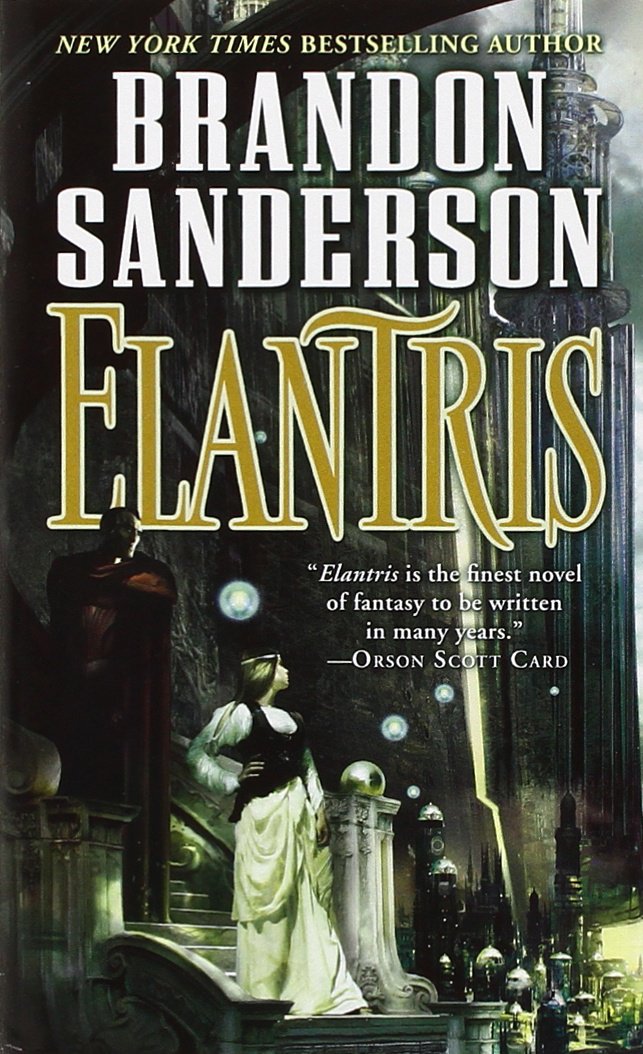
20. Chocolate Butterscotch - The OTP with the best banter // Raoden and Sarene from Elantris


Now, I've got a lot of couples that banter. I love me some good banter. But I think my current favorite is Raoden and Sarene. Sarene has wit and cleverness on her side, which makes for an epic heroine, but I love how Raoden can just one-up her without really thinking about it.

~*~

Congratulations for making it to the end of the post! That was much longer than I expected. But full of all the loveliest OTPs.

Now, if you'll excuse me, I'm going to go put my daughter down for a nap and go find some chocolate.

God bless!

Saturday, November 2, 2013

MEC Day 2: Favorite Movie

"Would you like me to describe it to you, or shall I find you a box?"


If you didn't guess it yet, I'm abbreviating for my titles. MEC stands for "30 Day Middle-Earth Challenge" save without the "30 Day" part and only using the first letter for the other words.. but ahem. You're smart readers. I don't need to explain that...

My favorite Middle-Earth movie... I'll admit, this one was hard. But after a long, internal debate, I'd have to go with...


The Two Towers is the story of the Fellowship after they break apart. By this time, Sam and Frodo are on their own path to Mordor, Merry and Pippin have been captured by the Uruk-hai, and the three hunters, Aragorn, Legolas, and Gimli, are off to save the captured hobbits from their fate. At least, that's the plan.

However, the three hunters get mixed up in the affairs of the country of Rohan, the mysterious White Wizard, an aging king, and an old stronghold in the mountains. Merry and Pippin find themselves the guest of a most unlikely and rather unhasty character, while Frodo and Sam are forced to trust an enemy as their guide. 


TTT (The Two Towers, if you didn't know) is probably my favorite Middle-Earth film so far because of the epic greatness that the film itself lends to the screen. For instance, we travel through some of my favorite places in Middle-Earth (Rohan, Ithilien, Fangorn Forest, etc.) and there's a great focus on some of my favorite characters (Merry & Pippin, Legolas & Gimli, Faramir, Samwise, etc. etc.). 

Some of the best things that come out in this film (and I'm talking about the extended edition as well as the regular film) are some of the friendships that are forged in depth. For instance, Legolas and Gimli, though from two races who have pretty much sworn to hate each other, have put aside their differences to work together towards a common goal; firstly, rescuing Merry and Pippin, then defending Helm's Deep from the attacking Uruk-hai. Their banter during the fight at the Deeping Wall is absolutely hilarious!


Keeping score on how many Uruks they kill.

While Gollum is not a favorite character of mine (I know too much of what he did and who he is to pity him that much), I do enjoy the scenes revolving around him and his two companions, mostly because of the relationship that springs up between Frodo and Sam. While in the first movie they played on the fact that Sam was, in a sense, beneath Frodo, being only a gardener and not the heir of one of the most famous hobbits in the Shire, yet in TTT, his character becomes that of Frodo's equal. But Sam doesn't flaunt it. He's in this quest just as deeply as Frodo is, and yet his heart's desire is to protect his master, see the quest through, and return to the Shire. He keeps a little bit of home close to him (roast chicken, anyone?), and not only encourages Frodo to keep going on, but also reminds him why he needs to go on. 

"It is special. It's a little bit of home."


Another thing that I love about TTT is the introduction of Faramir, second son of Denethor, the Steward of Gondor. He's just one of those unlikely heroes, and watching how his father mistreats and hates him makes you want to love him all the more. He does all that is asked of him, without complaint, even when it might be at the cost of his own life. He grants freedom to Frodo and Sam, knowing that sending them to his father would have given him Boromir-status in Denethor's eyes. 

I know I've probably said this before but I really like the extra scenes in the extended film that put Faramir and his brother both in the same place. You don't know much about Boromir from The Fellowship of the Ring, only that he came across as bossy, power-hungry, and selfish. But seeing him with Faramir, you get a taste of what the real Boromir was like. He was the favorite son, that's true, yet he did his utmost to show his father that Faramir was just as good as he was. 

TTT has some of the most beautiful scenery in Middle-Earth. Sure, you wander through the brown bogs of the Dead Marshes, climb to the black edges of the mountains surrounding Mordor, sympathize with the death and poverty of the Rohan people at the hands of the Wild Men, and step into the filthy metal workshops beneath Isengard, but there is still beauty. Indeed, that fact seems to be one of the main themes of the LOTR stories: even though darkness comes and evil seems to prevail, beauty and goodness will never be quenched nor ultimately destroyed. You have the lush plains of Rohan, the mysterious depths of Fangorn, and humbleness of the Golden Hall, and the life of Ithilien. 


"Look, Mr. Frodo! The king has got a crown again."

Guess what, peoples? I'm not done yet. This is turning into a regular 'ole film review. But anywho...

Helm's Deep is probably the best battle in all Middle-Earth; just my opinion. 300 men against 10,000 monsters; Legolas and Gimli keeping score; Legolas stair-surfing; Aragorn tossing the dwarf; the Deeping Wall explosion; the elves (did you know that they originally planned for Arwen to be at Helm's Deep? PJ filmed it that way, and then cut all of her scenes out because he later felt that she shouldn't be there) and their sacrifice; Theoden's charge; Gandalf's charge ("At dawn, look to the east."); and I could go on and on.

Also!! TTT has *the* best extended scenes ever!! Don't believe me? Look at some of the following pictures...


I apologize for the poor quality of the photo; here's what is said:
Legolas: Final count... forty-two.
Gimli: Forty-two? That's not bad for a pointy-eared elvish
princeling. I myself am sitting pretty on forty-three.
Legolas: (shoots the Uruk Gimli's sitting on) Forty-three.
Gimli: He was already dead.
Legolas: He was twitching.
Gimli: He was twitching because he's got my axe embedded
in his nervous system!

Eowyn attempts to make soup. Poor Aragorn...

And some of my all-time favorite quotes and scenes...

Aragorn: Legolas, what do your elf eyes see?

Legolas: The Uruks have turned northeast! They're taking the hobbits to Isengard!


~*~*~*~*~

Sam: What we need is a few good taters.

Gollum: What's taters, precious? What's taters, eh?

Sam: Po-tay-toes! Boil 'em, mash 'em, stick 'em in a stew! Serve them up crisp with a nice piece of fried fish.

(Gollum spits)

Sam: Even you couldn't say no to that.

Gollum: Oh, yes we could. Spoil nice fish. Give it to us raw and wriggling. You keep nasty chips.

Sam: You're hopeless.


~*~*~*~*~

Treebeard: We only just finished saying, "Good morning."

Merry: But it's nighttime already!

~*~*~*~*~

Faramir: My men tell me that you are orc spies.

Sam: Spies? Now wait just a minute...

Faramir: Then if you're not spies, then who are you?

(Sam and Frodo exchange uneasy glances)

Faramir: Speak.

Frodo: We are hobbits of the Shire. Frodo Baggins is my name, and this is Samwise Gamgee.

Faramir: Your bodyguard?

Sam: His gardener.


~*~*~*~*~

Eomer: How long since Saruman bought you? What was the promised price, Grima? When all the men are dead, you will have your share of the treasure? Too long have you watched my sister. Too long have you haunted her steps.

(two guards yank him away)

Grima Wormtongue: You see much, Eomer son of Eomund. Too much. You are banished forthwith from the kingdom of Rohan and all its domains. Under pain of death.

Eomer: You have no authority here! Your orders mean nothing.

Grima Wormtongue: Oh, this order does not come from me. It comes from the king. He signed it this morning.

~*~*~*~*~

Gimli: Now it's true you don't see many dwarf women. In fact, they are so like in voice and appearance, they are often mistaken for dwarf men.

(Eowyn turns to Aragorn)

Aragorn: (whispering) It's the beards.

Gimli: Of course, this has given rise to the belief that there are no dwarf women, and that dwarves just spring out of holes in the ground! Which is, of course, ridiculous!

~*~*~*~*~

Aragorn: (to Gandalf) In one thing you have not changed, dear friend. You still speak in riddles.


For more details about the 30 Day Middle-Earth Challenge, please visit here!

Namarie!

Monday, September 24, 2012

Magic: Harry Potter Vs. LOTR & Narnia... And What God Says About It


Hey there, readers! This is the post for which you've all been waiting! The second part of my thoughts on LOTR and Narnia, and ultimately, the issue of magic. And I do sincerely apologize for taking so long to post this.

A quick warning: Be prepared to do a lot of reading. This is a really long post. :)

Many people I know have said (and I quote directly from an acquaintance not on blogger), “What's the difference between Harry Potter and Lord of the Rings? They both have the same kind of magic in them.” It's a question I've long wanted to answer, so, as you can guess, this post is mainly about contrasting the magic in LOTR/Narnia and Harry Potter.

Theoden and Eowyn
I've wanted to study this issue for a long time now and truly discover the truth about it. I sort of knew that there was a difference, but if you asked me, I would only respond with vague answers. You see, I really wasn't sure. But I was certain there was a difference. I mean, Harry Potter was just downright evil, and Lord of the Rings and Narnia were... totally different, right? They just had to be. But were they? To tell you the truth, I was afraid of getting into study and finding out that the magic in LOTR and Narnia was evil, so for the longest time I kept pushing the research off. I am ashamed to admit that I didn't want to know about it if it was going to be bad.

Then Petie posted her thoughts on LOTR and Narnia, and the question of magic was once again pushed into the front of my mind. “This is it, Kiri,” I told myself. “Stop making excuses. Just research it.”

So, I did.

And I am not sorry that I did.

You know what I found? Oh, yes. I found a lot. This topic is much bigger than most people think it to be, and there's so much that can be researched and found.

Samwise
Okay, before I go any further, I must put this note in: What I say here is not meant to change your opinions toward Narnia and Lord of the Rings. I am not trying to attack or challenge your beliefs. I respect each and every one of your opinions, and I realize that choice is between you, your parents, and the Lord. Here I am simply trying to answer the question and share my own research and what the Lord has impressed upon my heart.

Please also know this: You cannot automatically say just because there's magic in something, you must have nothing to do with it. I am not promoting magic here, but please realize that if that (steadfastly avoiding anything remotely connected to magic) were the case, we should not be able to read the Bible, which has many stories in it concerning witchcraft (1 Samuel 28 and Acts 8 to name a few), but all are viewed in a bad light. Sorcery exists, I hate to admit it, but it's real. It is evil, and must be seen as such.

I add this warning as well: I shall be discussing things that are deeper than a G level. If you are squeamish, I would recommend you proceed or don't proceed with your own discretion.

So, are you ready? In a nutshell, these are the magic differences between LOTR/Narnia and Harry Potter:

As the main character of the Harry Potter stories, Harry Potter is a human boy practicing occult magick for his own benefit with copyable spells in a fictionalized part of our world. The Lord of the Rings and Narnia stories take place in a make believe world where magic is a power given by a higher being to certain nonhuman, secondary characters to be used for the good of others.

Now, let's break that down a bit into various points...

1. The Source of the Magic

The magic in LOTR and Narnia is very, very similar and thus I will be linking it together in many of the following points, first describing the situation in Harry Potter and then following up with a contrast in LOTR and Narnia. When studying the issue of magic, one of the first things you must look to is the source of that magic. Should I write that again in all caps? THE SOURCE!!! Where did the magic come from? This is one of the biggest and most important points.

The problem with the English language is that we use one word to mean so many different things. Consider the simple, little word ball. Usually, nowadays when we hear that word we think of a fun, bouncy plaything, right? Jane Austen wouldn't have thought of such a plaything, but rather a party in which dancing was a common occurrence. Look at two different definitions of the word train: to educate and to teach; also, a string of railroad cars powered by steam, diesel fuel, or electricity. The same thing happens with the word magic. However, we do have a small change to the spelling of the word at times to help us distinguish what exactly we're talking about. Add a “k” on the end and we now have the word magick, which is not the same as magic. Magick (with a “k”) is what is in Harry Potter (more on that later).

God clearly condemns witchcraft in many passages in the Bible, one of the most famous being Deuteronomy 18:10-12: “There shall not be found among you any one that maketh his son or his daughter to pass through the fire, or that useth divination, or an observer of times, or an enchanter, or a witch, or a charmer, or a consulter with familiar spirits, or a wizard, or a necromancer. For all that do these things are an abomination unto the Lord: and because of these abominations the Lord thy God doth drive them out from before thee.” (more on this in a bit)

The magick in the stories of Harry Potter Wikipedia defines as “a natural force that can be used to override the usual laws of nature.” The spells and chants that Harry Potter indulges in has been directly linked with occult magick, witchcraft and sorcery that gets its power from the king of darkness himself, Satan. J. K. Rowling has claimed that the magick in her works is nothing more than a make believe magic, a magic that she believes doesn't exist, but the type of magick in Harry Potter is real. Occult magick IS real. So... how do I know it's occult magick? Well, let's do some definitions here: occult magick includes the practices of divination, astrology, witchcraft, charms, spells, wizardry, and necromancy (communicating with the dead). Harry goes to school to learn these things. Spells that Harry casts consist of the gesturing of a wand combined with a verbal or mental incantation; they are an every day occurrence, along with charms, used on both friends and enemies in and out of the school. Some of Harry's friends consist of dead spirits who have been summoned to the present, and one of his classes is distinctly labeled as a divination class.

Gandalf
In contrast, the Wikipedia page on Magic in Middle Earth (the fantasy world in LOTR) states that magic here is defined as mystical, paranormal, or supernatural activity. This magic bears no resemblance to occult magick, and both Tolkien and Lewis describe it as coming from a higher being, a Creator. In Lord of the Rings, this higher being (whom Tolkien calls Iluvatar, meaning “Father of All”) gives magic to his servants (namely the wizards, and specifically Gandalf and Saruman) to do good and benefit the people. Iluvatar is a god figure, the god figure in LOTR, although he is never mentioned by name in the series. Readers can become acquainted with him in The Silmarillion, which I would recommend reading. These wizards (more on wizards in users of magic) cannot use the power for their own purposes, and when Saruman tries to do just that, he does not live long and sees a most bitter end. Gandalf, on the other hand, uses the power given him to help fight the coming darkness and destroy the evil that would pollute the world. In the end, good prevails and Gandalf's denouement is one of happiness. 

In Narnia, Aslan's powers are from his father, the Great King; again, a higher being who is shown as the one true god and Creator of Narnia. Aslan mentions the Deep Magic in Narnia many times, but you must realize that what is meant by “the Deep Magic” is supernatural power, which does indeed exist! Christ used supernatural power to raise Lazarus from the dead. In the Companion to Narnia, we learn that the Deep Magic is twofold: the Deep Magic and the Deeper Magic. The Deep Magic is defined as "the effects of justice in a created word, existing from the dawn of time." The Deeper Magic is eternal, from before the dawn of time, connoting a self sacrifice.

But how is it that I believe the magic in Narnia and LOTR to be good, while in Harry Potter it is bad? Let's go back to the verses in Deuteronomy and define each of the things that God condemns. The practice of having children pass through the fire (also known as febration) was common in the pagan nations around Israel back in Bible times. The parents who sent their sons and daughters through the flames did so to obtain an oracle or to avert national disaster. The fire was a purification process, namely to purify something by sacrifice, and bluntly, it was a human sacrifice by fire. Ugh! Is anyone else repressing disgusted shudders at this? Now, I'm not aware that Harry has to pass through any fire at any time in the series to purify himself, but as God had Moses mention febration in the verse, I thought I should mention it as well.

Divination Noah Webster gives this definition: the act of divining; a foretelling future events, or discovering things secret or obscure, by the aid of superior beings, or by other than human means. But wait! Superior beings? Can't that be the same as Aslan's father and Tolkien's Iluvatar? Let's keep reading. The ancient heathen philosophers divided divination into two kinds, natural and artificial. Natural divination was supposed to be effected by a kind of inspiration or divine afflatus; artificial divination was effected by certain rites, experiments or observations, as by sacrifices, cakes, flour, wine, observation of entrails, flight of birds, lots, verses, omens, position of the stars, etc. Occult magick is this artificial divination. I'm certain that Harry Potter wouldn't have been studying divination and learning by the aid of the One who we see as the Superior Being in our world, the Lord God. And if it is not of God, it is of the devil.

White Witch
An observer of times. It's wrong to look at clocks? No, I don't think that's what's meant here. This is also translated as “one who practices witchcraft.” Make sense now? But what is witchcraft? Back to handy dandy Webster: the practices of witches; sorcery; enchantments; intercourse with the devil.

The next couple of ones listed in Deuteronomy are grouped together with the times observer: an enchanter, a witch, and a charmer. These are also respectively translated as “one who interprets omens, a sorcerer, and a one who casts a spell.” I don't think it's necessary for me to give more than just the definitions. Enchanter: one who enchants; one who has spirits and demons at his command; one who practices enchantment, or pretends to perform surprising things by the agency of demons. Witch: a woman who, by compact with the devil, practices sorcery or enchantment. Charmer: one that charms, or has power to charm; one that uses or has the power of enchantment. Sorcerer: a conjurer; an enchanter; a magician.

But we're not quite done yet with Deuteronomy. Moses also lists “a consulter with familiar spirits, or a wizard, or a necromancer.” Again, translated also as: “a medium, or a spiritist, or who calls up the dead.” A wizard is described as an enchanter and a sorcerer. Necromancer: one who pretends to foretell future events by holding converse with departed spirits; a conjurer. Please notice that Deuteronomy 18: 11 specifically says “familiar spirits.” Those who take part in this magick are not doing so by accident. The spirits, to them, are familiar, and they know exactly what they're doing. I realize I'm posting a lot of definitions, but I want you to understand what I'm talking about. This is what God is condemning. It's basically performing by the power of the devil. That's magick. And that's exactly what's in Harry Potter.

Okay, are you still with me? I realize that was a tremendously long point, but the source of the magic really is the key difference between Harry Potter and LOTR/Narnia.

Although I really could just stop here as this issue of the source of the magic is the biggest and most imporant issue overall, let's keep going... there was some more stuff that I dug up, so I'm not done yet.

2. The Characters Who Use Magic

Harry Potter
Harry Potter is a human boy; there can be no mistaking that. He is born in England to human parents and, for the most part, lives with other humans. As he is the main character of the Harry Potter series, this shows magick as being a (I quote) “safe and lawful occupation,” thus encouraging readers to become more interested in it. Because Harry is their peer and role model, readers will strive to be like him, and as Harry uses magick and it's fine for him to do so, they assume the same about themselves. Pretty much this is the reasoning: Harry is human, just as we are, and because Harry is just like us, we can be just like him. Unfortunately, to be just like Harry is to practice the dark magick of the devil. To give you a statistic, a poll was taken a few years ago in which one out of ten children admitted that they were more interested in witchcraft after reading Harry Potter. Human characters acting as peers and role models and using magick are a dangerous thing as it encourages readers in the wrong directions.

Look at Lord of the Rings next. No peers are using magick or magic, but rather it is the mentor figures who have power. Gandalf and Saruman are called wizards. GASP! They're called wizards! Does that automatically make them bad? Before you judge, look at the context in which the word “wizard” is used. Tolkien describes Gandalf as one of the Istari, meaning messenger. The Istari were given power from the Creator (Iluvatar) to help and use for the benefit of others (look at purpose of magic), and these messengers do not call themselves “wizards.” When they appeared in Middle Earth, men were confused by their existence, as their power was something they could not understand. It was men who, in their ignorance, gave the Istari the name of wizards. The magic of these “wizards” is nothing like the occult magick of Harry Potter. Instead, it is like the power that Christ gave to his disciples, allowing them the ability to heal the sick and injured, cast out demons, and perform other miracles in His name.

Galadriel
But what of the Elves? They live in secluded places away from men and dwarves and hobbits and are seen by every other race to be oh so mysterious. They have magic, right? To answer bluntly, no. Not really. Their magic (I'm quoting here) “in the context of Middle Earth is in no way connected to supernatural power. It is a natural attribute, one that is given only to Elves, not humans.” Tolkien disliked using the word magic to describe the elves' natural abilities, but there wasn't another word to describe it. The other races (men, dwarves, orcs, and hobbits) called the elves' skill magic because they themselves couldn't understand it.

Moving on to Narnia. Like LOTR, magic is used by secondary, non-human characters. Aslan is the Great Lion, the Son of the Emperor over the Sea, the Real King of Narnia. As I have said before, Aslan is a god figure (please read the section on god figures in my earlier post), and I think all of this qualifies him as not a human.

So, what other Narnian characters use magic? Coriakin (from Voyage of the Dawn Treader) uses magic, is called a magician (and the Oppressor by the Dufflepods), and is a star. Yes, I said “star.” Coriakin may be wizard-like in appearance, but Lewis made him that way to separate him from the normal, human characters in his stories. The white beard and long robes are typical elements in a wizard's appearance, so that's how Lewis made Coriakin. Ramandu, in the same Narnia book (Dawn Treader), is also a star and the same things apply to him.

Oreius
Then we have centaurs. Glenstorm is a centaur gifted with the ability to prophesy, and there are others who have the gift of prophecy as well. However, we must realize that the gift of prophecy given by Aslan (the Superior Being) to the centaurs is the same as the gift of prophecy given by God that Paul mentions in Romans 12.

Lewis was careful to include a cautionary note with the magic in his stories. Some of the characters (Lucy, Digory, and others) use magic objects in the stories. For instance, Digory uses the magic rings in The Magician's Nephew to go to the wood between the worlds and get Polly after Uncle Andrew sent her there. However, this is where the cautionary note comes in. Later, as Digory and Polly explore the desolate world of Charn, Digory rings the golden bell and wakes the evil queen, Jadis. The same thing happens with Lucy: she reads a spell out of Coriakin's book to free the Dufflepods from their invisibleness but falls to temptation in the same book and eavesdrops wrongly on her friends. Magic can bring about both good and bad results and is not something that should be taken lightly.

3. The Realm of Magic

The realm of magic is closely linked with the characters who use magic. And with the knowledge of magic's existence. Actually, these points are all pretty much linked together. Harry Potter takes place in a fictionalized part of our own, real world. The school Hogwarts that Harry attends is found in Scotland and is only accessible to wizards and other “magical” creatures. Humans, or “Muggles” in Harry's vocabulary, cannot get to this wizard world, but rather, they see only ruins of an old castle and several warnings of danger.

The Pevensies discovering Narnia
Okay, so Harry Potter lived in England. So what? This (and I quote here) “brings the practice of magic imaginatively far closer to the personal condition and experience of the young reader.” Because Harry lives in the same world that we do, there is a fine to no line between what is real and what is fantasy. I've said before, the magick Harry practices is real, quite real. Going back to what I said about peers: because Harry Potter is living in the same world we live in, we can do anything Harry does. That's the danger.

Narnia and LOTR both take place in make believe worlds, worlds that C. S. Lewis and J. R. R. Tolkien respectively made up. As much as some of us would like it, we cannot go to Middle Earth or Narnia. There is a thick, definite line between reality and fantasy here, people. The magic here is, again, shown in a light where it cannot be copied.

4. The Knowledge of Magic's Existence

In the world of Hogwarts, the knowledge of magic is kept as a secret. Wizards and witches are encouraged not to show their powers to those who are not involved in magic, or muggles (humans). This corresponds directly with the occult idea, as the word “occult” literally means “hidden.” Magic is the main theme throughout the story and has been described as Harry's salvation, his means of getting through hard times and winning in the end.

The existence of magic is common knowledge in Narnia and Middle Earth. It is limited as to who can use it, but the knowledge that it exists and is real is openly acknowledged. However, though magic is common knowledge, it is used sparingly, and the characters do not depend on the magic to help them through their difficulties. The trials and battles they fight on their own, without any assistance from magic.

Aslan and Edmund
This point isn't necessarily as important as the source of the magic, but as it is a difference in the issue of magic between Harry Potter and Lord of the Rings/Narnia, I deemed it important based on a passage in 2 Corinthians 4. God wants our actions to be out in the light, as things often done in hiding are of a darker nature. True, I realize that some actions we do are meant to be secret (I'm talking about giving without thought of reparation or glory), but be careful about something that is so solidly secreted under lock and key. What is it and what's the purpose of its being secret? There's where you have to look.

5. The Purpose in Using Magic

This links right up with the two points flanking this one: the knowledge of magic and the acquisition of magic. Harry Potter learns magick to accomplish his own goals. It's his salvation, his means of getting things done. Magic is his whole life, in a sense. Whatever he does with magick is done with the intent of bringing benefit to himself. Sure, he may save his world once or twice during the course of the novels, but he does so by the use of magick and by the power of the devil, the master of chaos and destruction. Now, I'm not sure about you, but that seems a little backwards to me.

In contrast, Gandalf from LOTR is given power for the express purpose of helping and aiding others. The power given to the wizards by the Creator Illuvatar is meant to benefit those with whom the wizards come in contact. The same goes for Aslan in Narnia: his powers as the Son of the Emperor over the sea are used for the good of others. Those in LOTR and Narnia who use power for their own benefit, such as Saruman and the White Witch, do so at their own peril and are destroyed in the end.

Orcs marching to Helm's Deep

To wrap up this point, even if you don't look at the all-important issue of the source of the magic, I view Harry's powers as bad because he uses them for selfish reasons. How can anything be good when it's used in selfishness? Granted, this point isn't very big in the overall issue of magic and magick, but it is a big difference between the power used in LOTR/Narnia and Harry Potter.

6. The Acquisition of Magic

Harry Potter learns how to perform magick throughout the entire series. Indeed, the main idea of the books and films is his education in the world of magick. He goes to a boarding school, Hogwarts, and is instructed in the ways of magick. Thus, by following Harry's adventures in that boarding school, the reader learns right along with him about the magick, what it's used for, and, the most dangerous aspect, how to use it themselves. At the risk of sounding redundant, the magick in Harry Potter is real! That fact cannot be ignored. It's dangerous and evil, and must be seen as such.
Legolas

Whereas, the magical characters in Narnia and LOTR already have their magic when the stories take place, and the reader is not given details on how they acquired that magic nor are they encouraged to dwell on the actual process of getting magic. No character within any of the stories goes through the learning process of how to use magic.

Again, not a huge point, but one that definitely is worth mentioning.

Conclusion

If you're still reading this, I applaud you for getting this far. I realize that this was a rather lengthy post, so I'll hurry up and end this before I turn this into a novel. Please remember, I am not trying to challenge anyone's beliefs or convictions. I am simply presenting my research. Questions, comments... post as many as you would like, and I will do my best to respond accordingly.

The Fellowship of the Ring

As a final word, I would encourage you all not to take my word as golden truth. Look it up for yourselves. Discuss it with your parents. Pray about it. Dig into the Word of God and search some of these points out for yourself.

The following are links I used as part of my research for this post (other sources are listed in this post):


Thanks for reading!